
Stress Physiology and How Hypnotherapy Can Help
Understanding the Body’s Stress Response
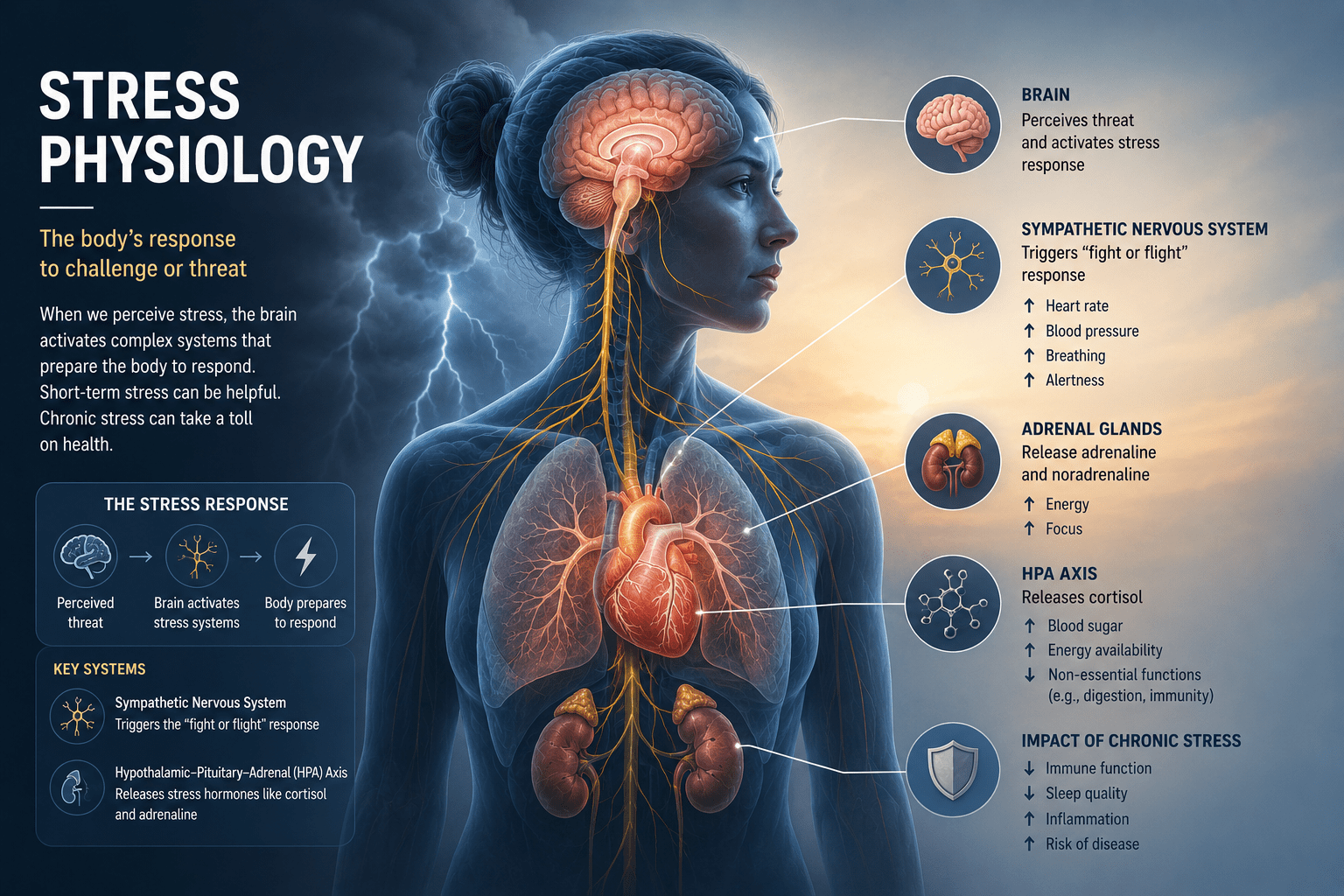
Stress is a natural physiological response designed to help humans survive challenging situations. When the brain perceives a threat—whether real or imagined—the nervous system initiates a series of rapid biological changes known as the stress response.
This response is primarily regulated by the Sympathetic Nervous System (SNS), often referred to as the body’s “fight, flight, or freeze” system. While this mechanism is essential for survival, prolonged activation can contribute to physical, emotional, and behavioral difficulties.
Understanding stress physiology provides valuable insight into how hypnotherapy can support relaxation, resilience, and well-being.
The Physiology of Stress
When a stressful event is perceived, the brain signals the autonomic nervous system to activate the Sympathetic Nervous System.
This activation produces several physiological changes:
Increased heart rate
Elevated blood pressure
Faster breathing
Increased muscle tension
Enhanced alertness
Release of stress hormones such as adrenaline and cortisol
Reduced digestive activity
Increased blood flow to muscles
These responses prepare the body to respond quickly to danger.
In short-term situations, this reaction is highly beneficial. However, when stress becomes chronic, the body may remain in a prolonged state of heightened activation.
Chronic Stress and Its Effects
Modern life often exposes people to ongoing psychological stressors such as:
Work pressures
Financial concerns
Relationship difficulties
Health worries
Information overload
Uncertainty about the future
Unlike immediate physical threats, these stressors may persist for weeks, months, or years. As a result, the Sympathetic Nervous System may remain activated longer than intended.
Chronic stress can contribute to:
Fatigue
Poor sleep
Anxiety
Irritability
Difficulty concentrating
Headaches
Digestive discomfort
Reduced immune function
Muscle tension and pain
The body may become accustomed to operating in a state of constant vigilance, making relaxation increasingly difficult.
The Relaxation Response
The body’s natural counterbalance to stress is the Parasympathetic Nervous System (PNS), sometimes called the “rest and restore” system.
When activated, the Parasympathetic Nervous System helps:
Slow the heart rate
Reduce muscle tension
Improve digestion
Promote relaxation
Support recovery and restoration
Encourage feelings of calm and safety
The ability to shift from sympathetic activation to parasympathetic relaxation is an important aspect of emotional and physical well-being.
Hypnotherapy and Stress Physiology
Hypnotherapy is a structured process that utilizes focused attention, guided relaxation, and therapeutic suggestion.
Many individuals experience deep physical relaxation during hypnosis. This relaxed state may help reduce excessive physiological arousal and encourage a shift away from chronic stress activation.
Hypnotherapy can help clients:
Develop relaxation skills
Improve stress management
Enhance emotional resilience
Reduce worry and rumination
Improve sleep quality
Build confidence in coping with challenges
Create healthier responses to everyday stressors
The Role of Suggestion
Stress is influenced not only by external events but also by how those events are interpreted.
Therapeutic suggestions used in hypnosis can help individuals:
View challenges differently
Increase feelings of control
Strengthen self-confidence
Encourage calm and constructive thinking
Develop healthier habits and routines
Over time, repeated positive experiences and constructive mental rehearsal may support the development of more adaptive responses to stress.
Neuroplasticity and Stress Reduction
The nervous system is capable of adapting through experience, a process known as neuroplasticity.
Repeated experiences of relaxation, positive self-talk, guided imagery, and therapeutic suggestion may help reinforce healthier patterns of responding to stress.
By practicing relaxation and mental skills regularly, individuals can often become more efficient at shifting from stress activation toward calm and balanced functioning.
A Holistic Approach to Stress Management
Hypnotherapy works best as part of a comprehensive wellness strategy that may include:
Regular physical activity
Healthy sleep habits
Good nutrition
Mindfulness practices
Relaxation training
Time management skills
Professional support when needed
Hypnosis can complement these approaches by helping individuals access a deeper state of relaxation and strengthening positive behavioral change.
Conclusion
Stress is a normal physiological response, but chronic activation of the stress system can affect both physical and emotional well-being. Understanding the role of the Sympathetic Nervous System provides valuable insight into how stress affects the body and why relaxation is so important.
Hypnotherapy offers a practical and effective method for promoting relaxation, enhancing resilience, and helping individuals develop healthier responses to life’s challenges. By supporting the body’s natural capacity for balance and recovery, hypnosis can become a valuable tool in stress management and personal well-being.
Learn More
Contact
Phone +27833840907
Email art@academyofhypnosis.co.za
Or fill in contact form
“A calm mind and a balanced nervous system provide the foundation for health, performance, and personal growth.”