

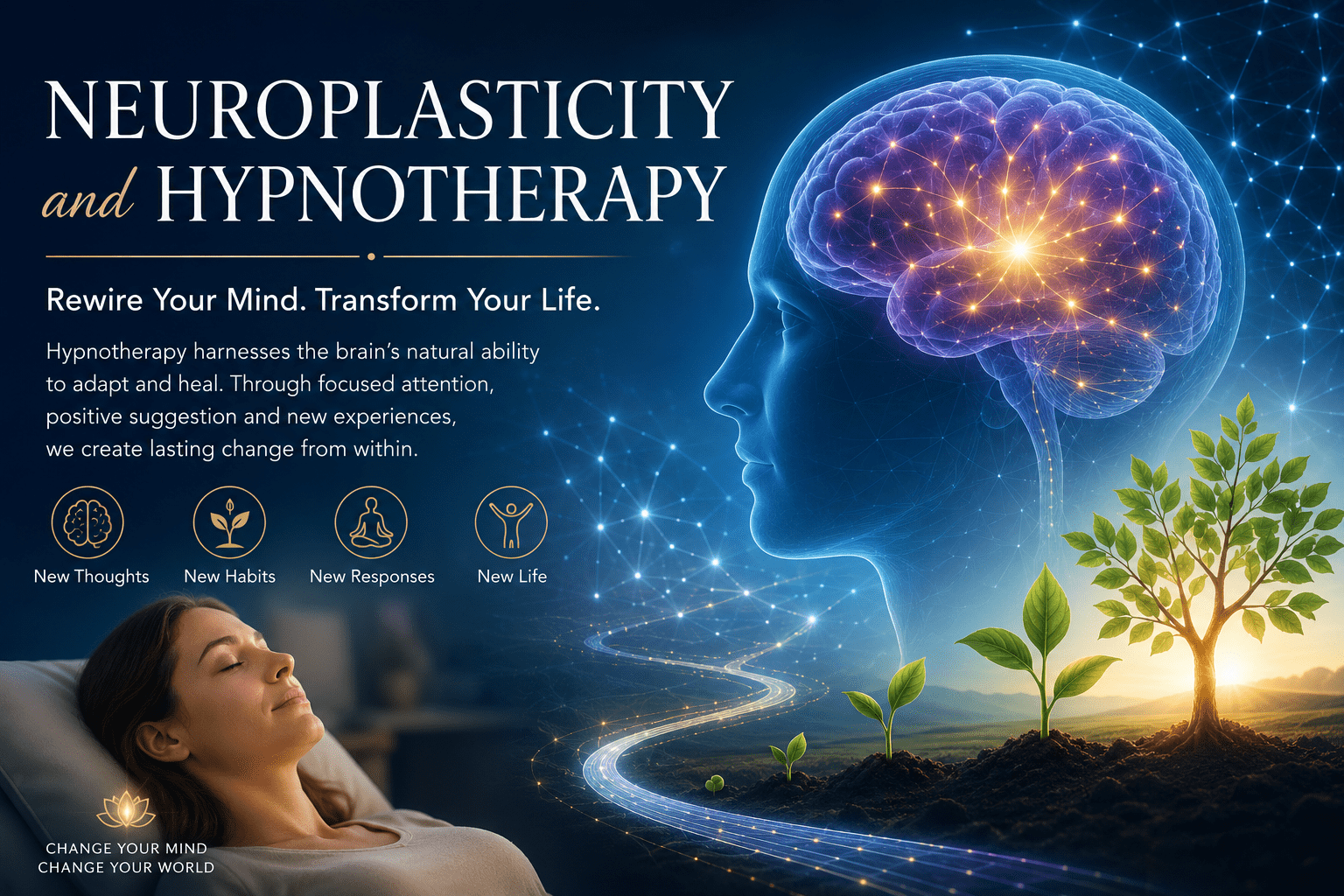
Neuroplasticity and Hypnotherapy: Creating Change Through the Sympathetic Nervous System.
Understanding Neuroplasticity
Neuroplasticity is the nervous system’s remarkable ability to adapt, reorganize, and form new neural pathways throughout life. Every thought, emotion, behaviour, and habit is supported by networks of nerve cells that communicate with one another. When experiences are repeated, these pathways become stronger. When new experiences and responses are practiced, new pathways can develop.
For many years, scientists believed that the adult nervous system was largely fixed. Modern research has demonstrated that change remains possible throughout life. This ability to adapt is known as neuroplasticity.
The Nervous System and Behaviour
While neuroplasticity is often discussed in relation to the brain, meaningful change involves the entire nervous system. Thoughts, emotions, and physical reactions are closely linked through the autonomic nervous system, which regulates many automatic bodily functions
The autonomic nervous system consists of two primary divisions:
The Sympathetic Nervous System (SNS)
The Parasympathetic Nervous System (PNS)
The Sympathetic Nervous System prepares the body for action. It increases alertness, raises heart rate, and mobilizes energy in response to perceived challenges or threats. Over time, repeated activation of stress responses can contribute to deeply ingrained patterns of anxiety, fear, avoidance, and emotional reactivity.
These patterns become familiar neural pathways that may continue to operate automatically, even when they are no longer beneficial.
How Hypnotherapy Promotes Change
Hypnotherapy utilizes focused attention, relaxation, guided imagery, and therapeutic suggestion to help individuals access and modify established patterns of thinking, feeling, and responding.
During hypnosis, attention becomes concentrated and external distractions are reduced. This focused state allows individuals to become more aware of automatic responses and more receptive to developing alternative patterns.
Rather than forcing change, hypnotherapy creates conditions that encourage the nervous system to learn new responses.
Neuroplasticity Within the Sympathetic Nervous System
The Sympathetic Nervous System is not merely a collection of fixed reflexes. It is part of a dynamic network that continually adapts based on experience.
Repeated stress, trauma, or negative conditioning can strengthen sympathetic responses, causing the body to react automatically to situations that may not present actual danger.
Through hypnotherapy, clients can repeatedly experience:
Feelings of safety
Emotional calmness
Positive expectations
Improved coping strategies
New behavioural responses
As these experiences are rehearsed and reinforced, the nervous system begins establishing alternative response patterns. This process reflects neuroplastic adaptation within the broader neural networks connecting the brain, spinal cord, and autonomic nervous system.
In simple terms, the nervous system learns a new way of responding.
Rewiring Automatic Responses
Many unwanted behaviours are maintained by automatic nervous system reactions. Examples include:
Anxiety and panic responses
Excessive worry
Public speaking fears
Examination stress
Phobias
Performance anxiety
Stress-related habits
Hypnotherapy helps people mentally rehearse desired responses while experiencing physiological relaxation. Repeated practice strengthens new neural pathways and weakens old, unhelpful patterns.
Just as repeated stress can train the nervous system to become more reactive, repeated positive experiences can train it to become more resilient.
The Role of Suggestion
Therapeutic suggestion is a powerful component of hypnotherapy. Positive suggestions introduced during hypnosis are not magical commands; rather, they act as new information that the nervous system can integrate and practice.
When suggestions are repeated and reinforced, they may contribute to the development of new neural connections and behavioural patterns. This is one of the ways hypnotherapy can support neuroplastic change
Building Long-Term Change
Neuroplasticity is not an instant process. Lasting change occurs through repetition and reinforcement. Hypnotherapy can accelerate learning by combining:
Focused attention
Emotional engagement
Relaxation
Mental rehearsal
Therapeutic suggestion
Together, these elements help create conditions in which new neural pathways can be established and strengthened.
A Neurophysiological Perspective
At the Academy of Hypnosis, we view hypnotherapy as a process that works through the functioning of the nervous system. While thoughts and emotions are important, meaningful change is often reflected in altered patterns of nervous system activity.
By helping clients experience new emotional and physiological responses, hypnotherapy may support neuroplastic adaptation throughout the neural networks that influence behaviour, stress responses, and wellbeing.
Conclusion:
Neuroplasticity demonstrates that change is possible throughout life. Hypnotherapy provides a structured method for encouraging this change by helping individuals practice new ways of thinking, feeling, and responding.
As new patterns are repeated, the nervous system can adapt, creating healthier responses to life’s challenges. Through focused attention, relaxation, and therapeutic suggestion, hypnotherapy offers a practical approach to supporting the natural plasticity of the human nervous system.
Learn more about professional hypnotherapy training and the neurophysiology of hypnosis now.
To learn more Contact