
The Sympathetic Nervous System: Understanding the Body’s Stress Response
What Is the Sympathetic Nervous System?
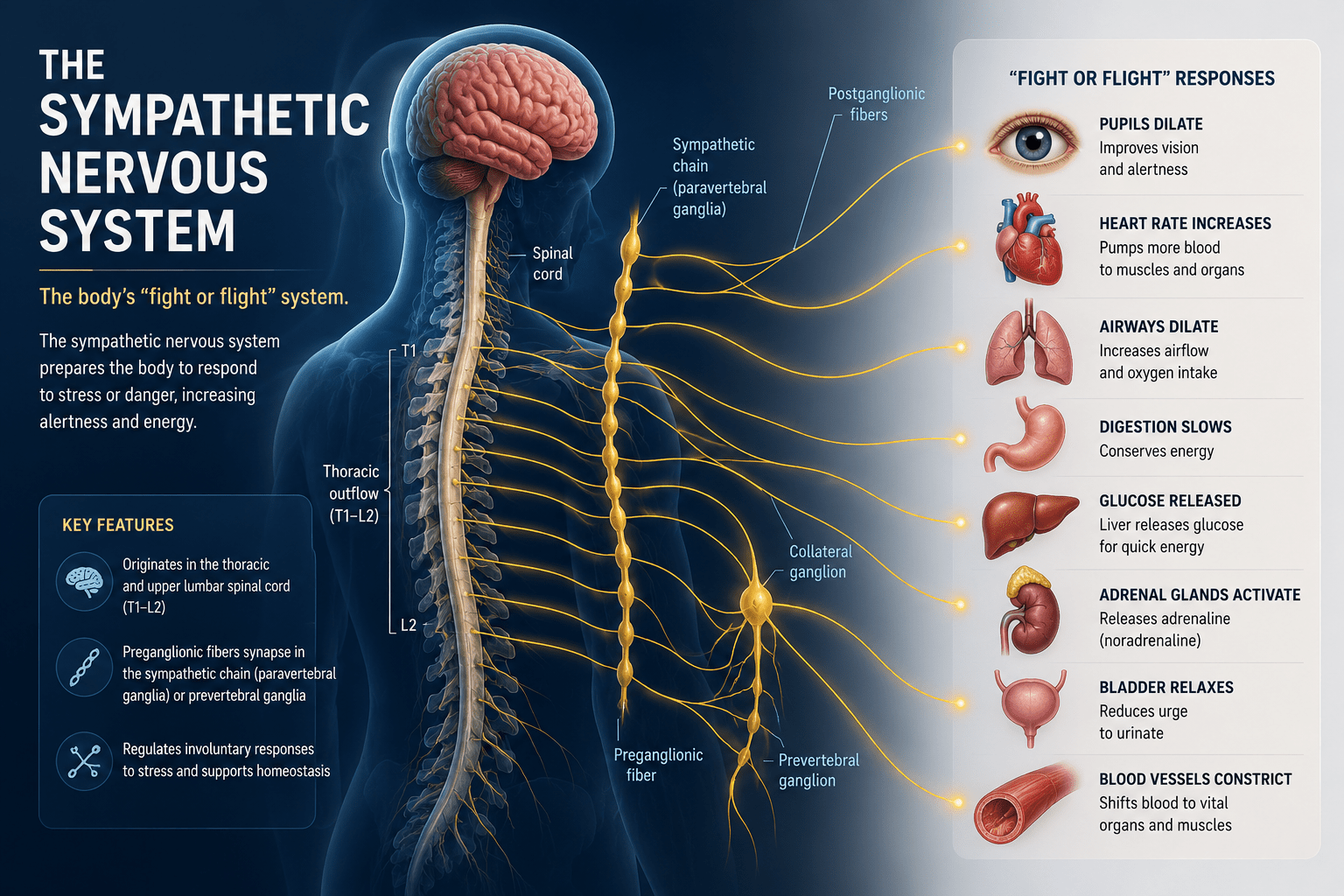
The Sympathetic Nervous System (SNS) is a vital part of the autonomic nervous system, the network that regulates many of the body’s automatic functions without conscious effort. Its primary role is to prepare the body for action during times of challenge, danger, stress, or excitement. This response is commonly known as the “fight-or-flight” response.
When the brain perceives a threat—whether physical, emotional, or imagined—the sympathetic nervous system rapidly activates a cascade of physiological changes designed to increase survival and performance. These responses evolved to help humans react quickly to danger and remain an essential part of our biology today.
What Happens During Sympathetic Activation?
When the sympathetic nervous system is activated:
Heart rate increases.
Blood pressure rises.
Breathing becomes faster and deeper.
Pupils dilate to improve vision.
Blood flow is redirected to the muscles.
Digestion slows down.
Adrenaline and noradrenaline are released.
Blood sugar levels increase to provide energy.
These changes prepare the body to respond quickly to perceived threats or demanding situations.
The Modern Stress Problem
While the sympathetic nervous system is essential for survival, modern life often triggers this response repeatedly. Financial pressures, relationship difficulties, work demands, health concerns, and constant digital stimulation can activate the same ancient survival mechanisms that were originally designed for short-term emergencies.
When the sympathetic nervous system remains activated for prolonged periods, individuals may experience:
Anxiety and excessive worry
Difficulty sleeping
Muscle tension
Digestive disturbances
Increased blood pressure
Reduced immune function
Fatigue and burnout
Difficulty concentrating
The body is not designed to remain in a continuous state of high alert.
The Brain, Perception, and Suggestion
An important feature of the nervous system is that it responds not only to real events but also to perceived threats. Thoughts, memories, expectations, and emotional associations can activate the sympathetic nervous system even when no actual danger exists.
For example, a person who has experienced a traumatic event may experience an elevated heart rate, rapid breathing, or anxiety simply by recalling the memory. Similarly, negative expectations and persistent worry can trigger stress responses throughout the body.
This demonstrates the powerful connection between the mind, the brain, and the autonomic nervous system.
How Hypnotherapy Helps using the Sympathetic Nervous System
Hypnotherapy is a therapeutic approach that utilizes focused attention, relaxation, and positive suggestion to influence unconscious patterns of thought and behavior.
During hypnosis, many individuals experience a reduction in sympathetic nervous system activation and an increase in parasympathetic activity—the body’s natural “rest, restore, and repair” system. This shift can support relaxation, emotional regulation, and improved stress management.
Hypnotherapy helps people:
Reduce stress and anxiety
Improve sleep quality
Develop healthier emotional responses
Increase resilience
Release limiting beliefs
Enhance confidence and wellbeing
By working with the subconscious mind, or The Sympathetic Nervous System, positive therapeutic suggestions may encourage new neural pathways and more adaptive responses to life’s challenges, overcoming the negative physical and mental problems caused within the brain.
Neuroplasticity and the Nervous System
The brain possesses a remarkable ability known as neuroplasticity—the capacity to change and reorganize itself through experience and learning.
Repeated thoughts, emotions, and behaviours strengthen neural pathways. Hypnotherapy can help introduce new patterns of thinking and feeling that support calmness, confidence, and emotional balance. Over time, these new patterns may become more automatic, reducing unnecessary sympathetic activation and promoting healthier responses to stress.
Achieving Balance
Optimal health does not require eliminating the sympathetic nervous system. Rather, it involves maintaining a healthy balance between activation and recovery.
The sympathetic nervous system helps us perform, achieve, and respond to challenges. The parasympathetic nervous system helps us rest, heal, digest, and recover. Both systems are essential.
Through relaxation training, self-hypnosis, mindfulness, healthy lifestyle practices, and professional hypnotherapy, individuals can learn to regulate their nervous system more effectively and create greater physical, emotional, and mental wellbeing.
Learn More
We teach evidence-informed hypnotherapy approaches that help practitioners understand the relationship between the brain, the nervous system, suggestion, and human behaviour.
Whether you are seeking personal growth or professional hypnotherapy training, understanding the sympathetic nervous system provides valuable insight into how stress affects the mind and body—and how positive change can occur.
Email: admin@academyofhypnosis.co.za
[contact-form-7 id=”615fd00″ title=”Contact form 1″]